Unlikely Vessels Day #24: Thomas — The Skeptic Who Demanded Evidence

“Now Thomas, called the Twin, one of the twelve, was not with them when Jesus came. The other disciples therefore said to him, ‘We have seen the Lord.’ So he said to them, ‘Unless I see in His hands the print of the nails, and put my finger into the print of the nails, and put my hand into His side, I will not believe.’ And after eight days His disciples were again inside, and Thomas with them. Jesus came, the doors being shut, and stood in the midst, and said, ‘Peace to you!’ Then He said to Thomas, ‘Reach your finger here, and look at My hands; and reach your hand here, and put it into My side. Do not be unbelieving, but believing.’ And Thomas answered and said to Him, ‘My Lord and my God!’ Jesus said to him, ‘Thomas, because you have seen Me, you have believed. Blessed are those who have not seen and yet have believed.'” — John 20:24–29 (NKJV)
THE JOURNEY
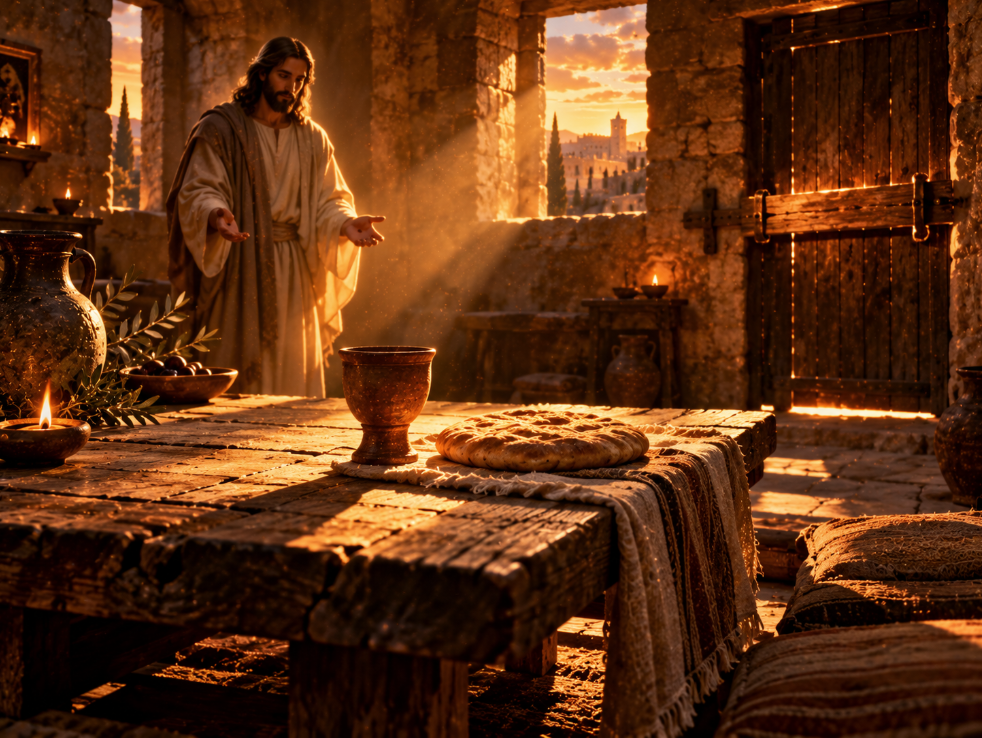
The backdrop of this post-resurrection encounter is an atmosphere of locked doors, lingering trauma, and shattered hopes in Jerusalem. Following the public torture and crucifixion of Jesus, the apostolic company retreated behind bolted entrances, terrified of the temple authorities and Roman cohorts. When the resurrected Christ first appeared to the ten on resurrection evening, Thomas Didymus (“the Twin”) was absent. Thomas was not a shallow cynic; earlier in John’s Gospel, when Jesus resolved to return to Judea despite threats of stoning to raise Lazarus, it was Thomas who bravely urged his peers, “Let us also go, that we may die with Him” (John 11:16). His disposition was pragmatic, deeply loyal, and intensely realistic—a man who needed concrete bearings (“Lord, we do not know where You are going, and how can we know the way?”).
When the ecstatic disciples insisted, “We have seen the Lord,” Thomas refused to be swept away by secondhand enthusiasm or group hysteria. Protecting his bruised heart from false hope, he drew a line in the sand with forensic precision: “Unless I see in His hands the print of the nails, and put my finger into the print of the nails, and put my hand into His side, I will not believe.” For eight long days, he sat in that tension, wrestling with doubt while living in community with those who claimed the miracle. When Jesus appeared through the shut doors eight days later, He did not banish Thomas or scold his intellect. Bypassing greeting formalities, Christ addressed Thomas’s unexpressed, private conditions verbatim: “Reach your finger here… reach your hand here, and put it into My side.” Shattered not by shame but by the intimate, omniscient tenderness of the Savior, Thomas bypassed physical touch altogether to utter the highest Christological confession in the Gospels: “My Lord and my God!” (Ho Kyrios mou kai ho Theos mou!). Church history confirms that this transformed skeptic took the Gospel farther east than any other apostle, traversing Persia and planting the Church across the Malabar Coast of southern India before sealing his witness with a martyr’s spear.
Heart of the Matter
The locked Upper Room during those eight days represents those dark, lonely corridors where intellectual doubt, existential perplexity, and past disillusionment collide with faith. You hear others share effortless testimonies, watch peers rejoice in spiritual revival, and listen to confident sermons, yet inside your own soul, the math does not add up. Perhaps you watched a prayer go unanswered, suffered a devastating loss, or encountered profound hypocrisy in religious institutions, and your heart retreated behind an emotional lock. To protect yourself from being crushed again, you erect stubborn demands for proof, telling yourself that unless you get undeniable clarity, you refuse to commit.
Religious circles often treat doubt as an unpardonable betrayal, forcing struggling believers into hypocritical silence. But the revelation of The Skeptic Who Demanded Evidence reveals that Christ does not fear your honest questions. Jesus did not come through the walls to humiliate Thomas; He came specifically to meet him at the precise point of his empirical requirement. Notice the profound grace: Christ kept the scars of His crucifixion in His resurrected body—eternal physical evidence that He enters our pain. Honest doubt that seeks truth is not the opposite of faith; apathy is. Thomas stayed in the room with the believers for eight days despite his skepticism, positioning himself for encounter rather than walking away into bitter cynicism. Look at the signature track record: the God who reveals His wounds does not discard deep thinkers or honest skeptics; He invites your scrutiny, turns demanding questions into radical conviction, and deploys once-doubting minds as fearless pioneers to the ends of the earth.
Faith in Action
The identity of the believer is applied when we stop hiding our honest questions behind pretense and begin bringing our doubts directly to the risen Christ.
The Challenge: Explicitly identify an area of theological wrestling, an unanswered question, or an emotional disappointment where you have withheld your wholehearted trust, and invite the presence of Christ into that specific locked room today.
- Stay in the Room: Resist the urge to isolate yourself, abandon community, or default into cynical sarcasm when you don’t understand what God is doing. Keep showing up where the Body gathers.
- Confess the Forensic Demand: Speak your honest questions aloud to God instead of nursing private bitterness. Name the specific wound, disappointment, or requirement of proof you have placed on Him.
- The Skeptic’s Surrender Prayer: Find a quiet space, hold your hands out with open palms upturned as if looking for the nail prints, and pray: “Lord Jesus Christ, Son of the Living God, You are the Resurrection and the Life who bears the scars of our redemption and welcomes the honest seeker into Your presence. I confess that I have often guarded my heart with cynicism, demanding proof on my terms and doubting Your goodness when my expectations were shattered. Forgive me for confusing my intellectual questions with self-protective unbelief. Today, like Thomas in the Upper Room, I lay down my terms before Your living presence. Step through the locked doors of my skepticism, reveal Your reality to my heart, and quiet my anxious mind. I yield my intellect, my doubts, and my future to Your sovereignty. I declare You are my Lord and my God. Anchor my faith in Your finished work, advance Your Kingdom through my consecrated mind, and let my unshakeable conviction be an eternal monument to Your patient, accommodating grace. Amen.”
Prayer for the Day
Sovereign Lord and Risen King, You are the God who does not break the bruised reed, who understands our human frailties, and whose truth withstands the deepest scrutiny of the human mind, and Your wounded hands are my permanent assurance. I confess that I easily allow unfulfilled desires, delayed answers, and the complexity of life to make me suspicious of Your promises. Wash away my secret skepticism, my fear of disappointment, and my reluctance to trust where I cannot see today. Give me the profound, quiet composure to rest in the reality of Your resurrection, living in the blessing of those who have not seen and yet believe. I rest securely in Your unyielding Word, confident that You will turn my deepest perplexities into unwavering apostolic boldness. Amen.
SIGNATURE DECREE
“Jesus came, the doors being shut, and stood in the midst, and said, ‘Peace to you!’… And Thomas answered and said to Him, ‘My Lord and my God!'” — John 20:26, 28 (Our Memorial Translation: “The locked doors of intellectual wrestling and the deep scars of past disappointment hold zero power to keep Christ out; the Great I AM meets your honest skepticism with His wounded grace, transforming demanding questions into the highest confession of apostolic devotion.”)