
Faithfulness Day #8: The Song of the Barren

“Then Hannah prayed and said: ‘My heart rejoices in the Lord; in the Lord my horn is lifted high. My mouth boasts over my enemies, for I delight in your deliverance. There is no one holy like the Lord; there is no one besides you; there is no rock like our God… The Lord sends poverty and wealth; he humbles and he exalts. He raises the poor from the dust and lifts the needy from the ash heap; he seats them with princes and has them inherit a throne of honor. For the foundations of the earth are the Lord’s; on them he has set the world.'” — 1 Samuel 2:1–2, 7–8 (NIV)
THE JOURNEY
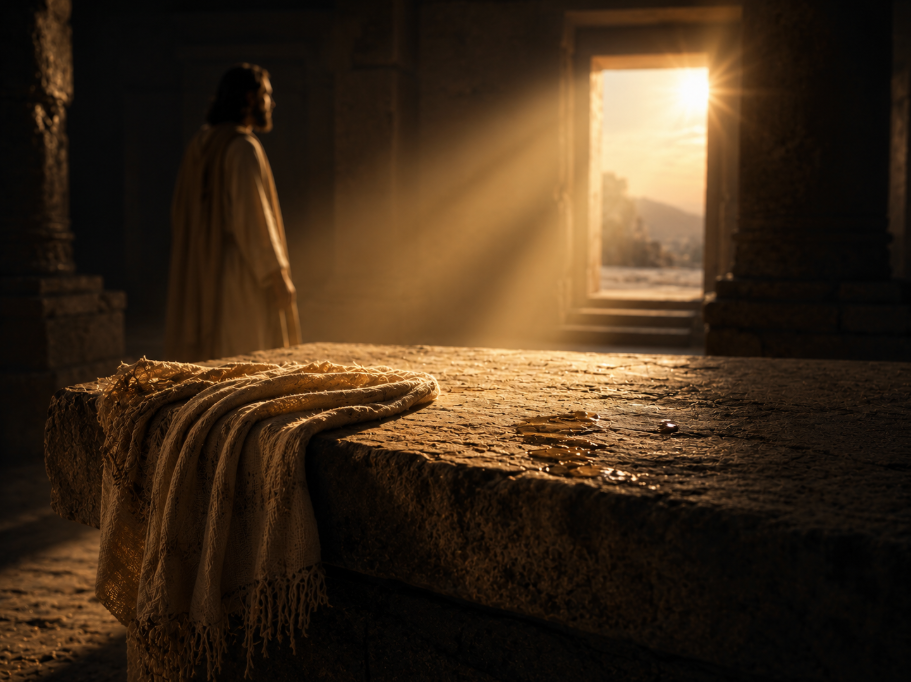
The backdrop of this narrative is an agonizing, multi-layered season of personal barrenness, societal silent grief, and relentless emotional torment. Year after year, Hannah traveled with her family to the tabernacle at Shiloh, carrying the heavy, cultural stigma of an empty womb. To complicate her sorrow, her husband’s second wife, Peninnah, deliberately provoked and humiliated her daily because of her inability to conceive. Hannah’s grief was so profound that it manifested physically; she wept bitterly, her heart was broken, and she could no longer eat. In her desperation, she threw herself before the altar of the Lord, weeping so intensely that her lips moved without sound, causing the high priest Eli to mistake her raw, silent anguish for drunkenness.
But where human capability and natural biology offered an absolute dead end, the unshakeable faithfulness of God was preparing a historic turnaround. God did not miss the silent movement of her lips or the tears staining the tabernacle floor. He remembered her. He did not merely open her womb to silence her rival; He answered her desperate prayer by giving her a son, Samuel, who would grow up to become one of Israel’s greatest prophets and kingmakers. In response to God’s covenant loyalty, Hannah’s weeping was completely transformed into a magnificent prophetic anthem. She went from scraping the dust of despair to singing about a God who radically overturns the fortunes of the broken, proving that He is a Rock who can build life out of the most barren spaces.
Heart of the Matter
The season of barrenness represents those areas of your life that seem completely dead, unproductive, and mocked by circumstances. It is the dream that refuses to launch, the creative drought that won’t break, or the deep, personal prayer that you have wept over for years with no visible result. In those long, quiet seasons of waiting, the enemy whispers that your life is unvouched for, that your prayers are hitting a brass heaven, and that you will always be defined by what you lack.
But the mystery of Hannah’s song reveals that God’s silence is never His absence. God frequently uses our seasons of deepest barrenness to cultivate a dependency that births something far greater than we originally imagined. Hannah wanted a son to ease her social shame; God wanted a prophet to save a nation. When you bring your raw, unvarnished pain directly to the altar instead of letting it turn into bitterness, you place your deficit into the hands of a Covenant Keeper. He does not just fix the problem—He completely rewrites your story, turning your private ash heap into a public monument of His faithfulness.
Faith in Action
The faithfulness of God is applied when we stop hiding our grief from God and start pouring it out at His altar.
The Challenge: Pour out your deepest, unspoken ache before the Lord and anchor it to His track record.
- Bring the Silent Ache: Identify the prayer request that has caused you the most hidden tears or embarrassment. Refuse to bury it today. Bring it plainly before God, letting your heart be completely honest with Him.
- Reject the Mockery: When anxiety or outside voices point out your lack today, refuse to argue with them. Instead, point your soul to God’s character, declaring: “There is no rock like my God. He knows how to raise me from the dust.”
- The Altar Song Prayer: Find a quiet space where you can pray without distraction, open your hands, and pray: “Sovereign Lord, You are the God who remembers the forgotten. I confess that the barren places in my life have made me heavy with grief and doubt. Forgive me for losing hope in the dark. Today, I pour out my soul at Your altar. I trust that You hear the cries I cannot even find the words to speak. Open the dead spaces, fulfill Your purposes in me, and give me a song of deliverance that puts Your faithfulness on display. Amen.”
Prayer for the Day
O Rock of my Salvation, You are the God who lifts the needy from the ash heap and turns mourning into dancing. I confess that I have often allowed the barren areas of my life to dictate my view of Your goodness. Wash away my resentment and my exhaustion today. Give me the grace to keep seeking Your face even when the answer is delayed, and grant me the absolute assurance that You are working out a grander purpose through my waiting. I anchor my heart in Your flawless track record today. Amen.
THE STONE OF REMEMBRANCE
“He raises the poor from the dust and lifts the needy from the ash heap…” — 1 Samuel 2:8 (Our Memorial Translation: “The womb of your purpose may look dead to the world, but the Covenant God specializes in turning empty spaces into historic monuments of His grace.”)