
Faithfulness Day #15: The Rebuilding in the Ruins

“Then I said to them, ‘You see the trouble we are in: Jerusalem lies in ruins, and its gates have been burned with fire. Come, let us rebuild the wall of Jerusalem, and we will no longer be in disgrace.’ I also told them about the gracious hand of my God on me and what the king had said to me. They replied, ‘Let us start rebuilding.’ So they began this good work. But when Sanballat the Horonite, Tobiah the Ammonite official and Geshem the Arab heard about it, they mocked and ridiculed us. ‘What is this you are doing?’ they asked. ‘Are you rebelling against the king?’ I answered them by saying, ‘The God of heaven will give us success. We his servants will start rebuilding, but as for you, you have no share or claim or historic right in Jerusalem.'” — Nehemiah 2:17–20 (NIV)
THE JOURNEY
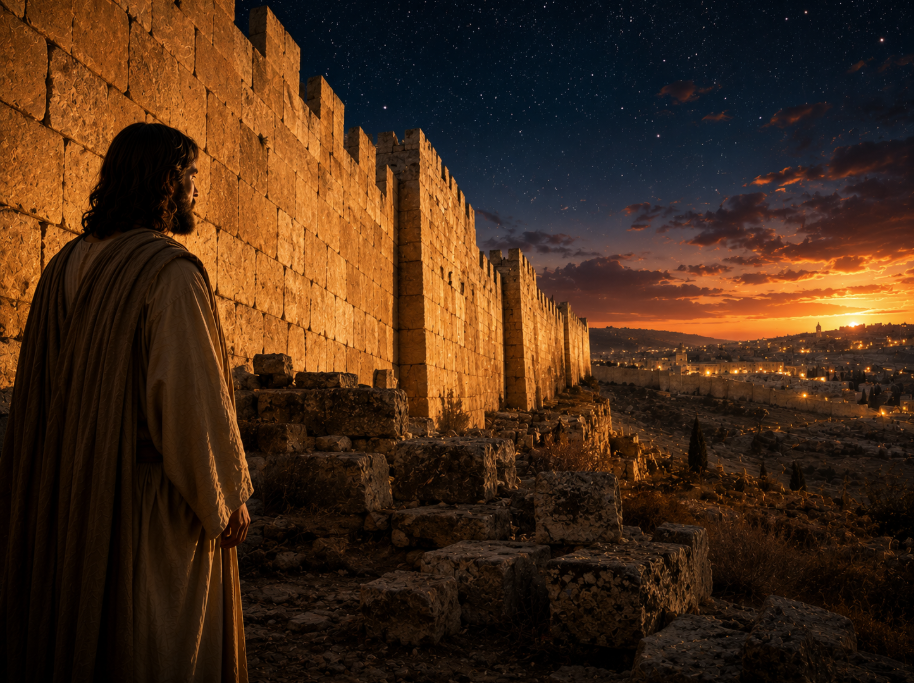
The backdrop of this narrative is a multi-generational, demoralizing landscape of structural ruin, economic stagnation, and psychological defeat. For over a century, the city of Jerusalem had remained a broken wasteland, its massive protective walls leveled to rubble and its gates charred by the fires of Babylonian conquest. The surviving remnant of Israel lived in constant vulnerability, exposed to neighboring raiders and carrying the deep, heavy stigma of historical failure and national disgrace. Nehemiah, a high-ranking cupbearer to the Persian king, felt a profound divine burden to fix this vulnerability. Armed with royal permission but carrying nothing but a vision, he traveled to the wreckage. His midnight inspection revealed a landscape so choked with fractured stone and debris that his mount could not even pass through.
Where the broken masonry spoke only of structural finality, the unshakeable faithfulness of God was preparing an accelerated restoration. Nehemiah did not rely on human ingenuity, military strength, or foreign financing to motivate the broken populace. He pointed directly to the divine track record, declaring, “The God of heaven will give us success.” Instantly, a scattered, grieving community united under a single purpose. But the moment the work began, furious local warlords—Sanballat, Tobiah, and Geshem—launched a vicious, relentless campaign of psychological warfare. They mocked the structural integrity of the project, spread false rumors of treason, and threatened military ambush. In response, Nehemiah did not pause the construction to negotiate or defend his reputation. He anchored his people to the wall and the sovereign decree of the Creator. God so completely sustained their focus and protected their hands that the entire, massive fortification was completely rebuilt and sealed in a staggering fifty-two days, turning a century of ruin into a monument of covenant loyalty.
Heart of the Matter
The ruins of Jerusalem’s walls represent those shattered, neglected areas of your life that have been broken for so long that you have simply learned to live with the vulnerability. It is a long-standing financial wreck, a family dynamic that has been fractured for years, or a piece of your emotional health that feels completely leveled by past trauma. In those exposed spaces, when you finally pick up a trowel to change things, the enemy dispatches “Sanballat and Tobiah”—critical voices, internal self-doubt, and sudden external opposition—to mock your efforts and tell you that a broken life can never be made whole.
But the miracle of the rebuilding reveals that God is the absolute Master of structural resurrection. God does not look at your past failures, your broken pieces, or the length of time you have been in a hole and see an impossible dead end; He sees raw material for a fresh monument of His grace. His faithfulness is not restricted by the severity of the damage or the volume of the critics trying to halt your progress. When He decrees a season of restoration, He personally provides the strength to lay the next stone. Look at the track record: the God who rebuilt Jerusalem out of the ash heap can mend your broken spaces, silence your mockers, and give you a secure future that no enemy can breach.
Faith in Action
The faithfulness of God is applied when we stop staring at our piles of debris and start laying stones of obedience in the face of criticism.
The Challenge: Pick up the trowel and take one tangible step to rebuild a broken area of your life today.
- Refuse the Dialogue of Mockery: The moment critical thoughts or outside voices try to tell you that your situation is hopeless or that you aren’t strong enough to change today, cut them off. Declare firmly: “The God of heaven will give me success. I am doing a great work and I will not come down.”
- Work in Your Section: Do not try to fix the entire century of damage all at once. Focus entirely on the immediate task, the single conversation, or the small boundary line God has placed right in front of your hands today.
- The Rebuilder’s Prayer: Find a quiet space, open your hands as if ready to build, and pray: “Sovereign Architect, You are the Restorer of the Ruins. I confess that I have lived in the shame and vulnerability of my broken places for far too long. Forgive me for letting the mockery of the enemy halt my progress. Today, I anchor my heart to Your flawless track record. I pick up the tool of faith and start rebuilding. Give my hands supernatural strength, shield my mind from the arrows of criticism, and let the walls of my life rise up as a beautiful, unshakeable monument to Your covenant faithfulness. Amen.”
Prayer for the Day
Master Builder of my Destiny, You are the God who raises up the fallen walls and turns a landscape of ash into a fortress of praise. I confess that I easily grow weary when I look at the sheer scale of the mess in my life and hear the loud, discouraging whispers of opposition. Wash away my exhaustion and my defeatist mindset today. Give me the fierce, focused resolve of Nehemiah to hold my ground, keep building, and trust that Your gracious hand is actively guiding my steps to bring about a complete, magnificent restoration. Amen.
THE STONE OF REMEMBRANCE
“The God of heaven will give us success. We his servants will start rebuilding…” — Nehemiah 2:20 (Our Memorial Translation: “Human sight sees only a hopeless pile of charred rubble; Covenant faith sees the raw material for an unshakeable monument of divine restoration.”)