
Peace Day #11: The Power of the “Small Portion”

“The Lord is my chosen portion and my cup; you hold my lot. The lines have fallen for me in pleasant places; indeed, I have a beautiful inheritance.” — Psalm 16:5-6 (ESV)
THE JOURNEY
In the world of high-stakes publishing and clinical instruction, the “Big Picture” was Julian’s constant companion. He was always looking at the cumulative sales of his series, the overall passing rate of his cohort, and the long-term trajectory of his career. He believed that peace would come when the “Whole Map” was conquered.
But the “Big Picture” is often a source of “Big Anxiety.” When you look at the mountain in its entirety, you forget to feel the solid ground beneath your feet. Julian realized he was suffering from “Scale Stress”—the paralysis that comes from trying to manage a future that hasn’t happened yet.
One morning, while preparing for a clinical rotation, Julian looked at his “Your Goodreads Quick Guide.” He realized that while he wanted to reach thousands of readers, his real influence was happening one reader at a time. He thought about Saige, Miriam, and Patrick—his students. He didn’t need to revolutionize the entire nursing profession today; he just needed to be a steady guide for these five people for the next eight hours.
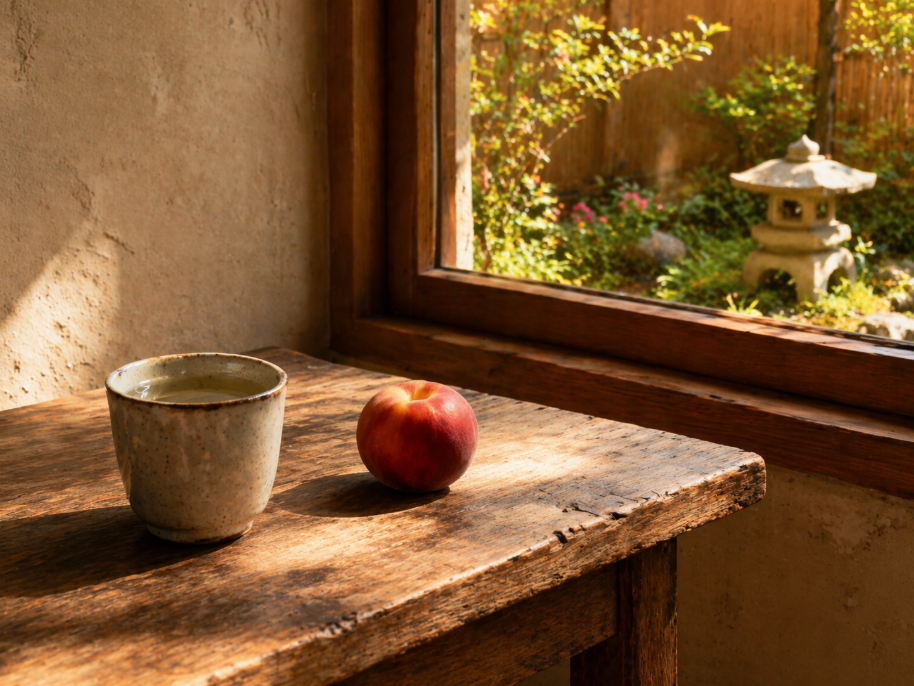
He decided to embrace the “Principle of the Portion.” He stopped trying to own the whole “land” and started focusing on the “lines” God had drawn for him today. He realized that God doesn’t give us the grace to carry a month’s worth of burdens; He gives us the portion for the next meal. By shrinking his focus to his immediate “cup,” the overwhelming noise of the “Big Picture” faded into a manageable melody. He found that peace lives in the small, faithful details of the present portion.
Heart of the Matter
Psalm 16 uses the language of land ownership. In ancient Israel, “lines” were used to mark out a family’s specific plot of land. David isn’t praising God for a massive empire in this moment; he is praising Him for his specific “portion.”
The Peace of the Portion is found in two truths:
- The Boundary is a Blessing: We often view our limits—our time, our energy, our single manuscript—as frustrations. But David says the “lines” have fallen in “pleasant places.” Boundaries are actually God’s way of protecting your peace. You aren’t responsible for the whole world; you are responsible for your “lot.”
- Contentment in the Cup: When the Lord is your “cup,” your internal satisfaction is not dependent on how much “land” you conquered today. It is dependent on the quality of your connection to Him.
Peace is refusing to look over the fence at someone else’s portion and falling in love with your own.
Faith in Action
Comparison is the thief of peace, but contentment is its guardian.
The Challenge: Identify one “Big Picture” worry that is making you feel small and overwhelmed today.
- Draw the Line: Physically take a piece of paper and draw a circle. Inside the circle, write down the three things you are responsible for in the next four hours. Everything outside that circle is “God’s lot” for now.
- The “Pleasant Places” Prayer: Throughout the day, when you feel the urge to compare your progress to someone else’s, say out loud: “The lines have fallen for me in pleasant places. My portion is enough because You are my portion.”
- The Deep Dive: Instead of skimming through a dozen tasks, pick one “small portion”—one chapter to edit, one student to encourage, or one set of weights to lift—and do it with 100% focus and gratitude.
Prayer for the Day
Lord of My Inheritance, I confess that I often feel overwhelmed by the scale of my dreams and the weight of my duties. Forgive me for trying to carry the whole map when You only asked me to walk the next mile. I thank You for my “portion” today. I thank You for the specific students, the specific words, and the specific strength You have given me. Help me to see the beauty in my boundaries and to find my ultimate satisfaction in You, my Cup and my King. Amen.
PEACE Note
“He who is not contented with what he has, would not be contented with what he would like to have.” — Berthold Auerbach