
Peace Day #26: The Peace of the “Perfect Thermostat”

“I have learned to be content whatever the circumstances. I know what it is to be in need, and I know what it is to be in plenty.” — Philippians 4:11-12 (NIV)
THE JOURNEY
In every building, there are two types of instruments that deal with the environment: the thermometer and the thermostat.
A thermometer is reactive. It simply reflects the temperature of the room. If the room is freezing, the thermometer drops; if the room is sweltering, the thermometer rises. It is a victim of its surroundings, having no power to change the atmosphere—only to mirror it.
Many people live their lives as “Spiritual Thermometers.” If their morning starts with a conflict, their “temperature” drops into irritability. If they receive a piece of bad news, they immediately freeze in fear. Their peace is entirely dependent on the “weather” of their day. They are constantly fluctuating, exhausted by the effort of trying to keep up with an environment they cannot control.
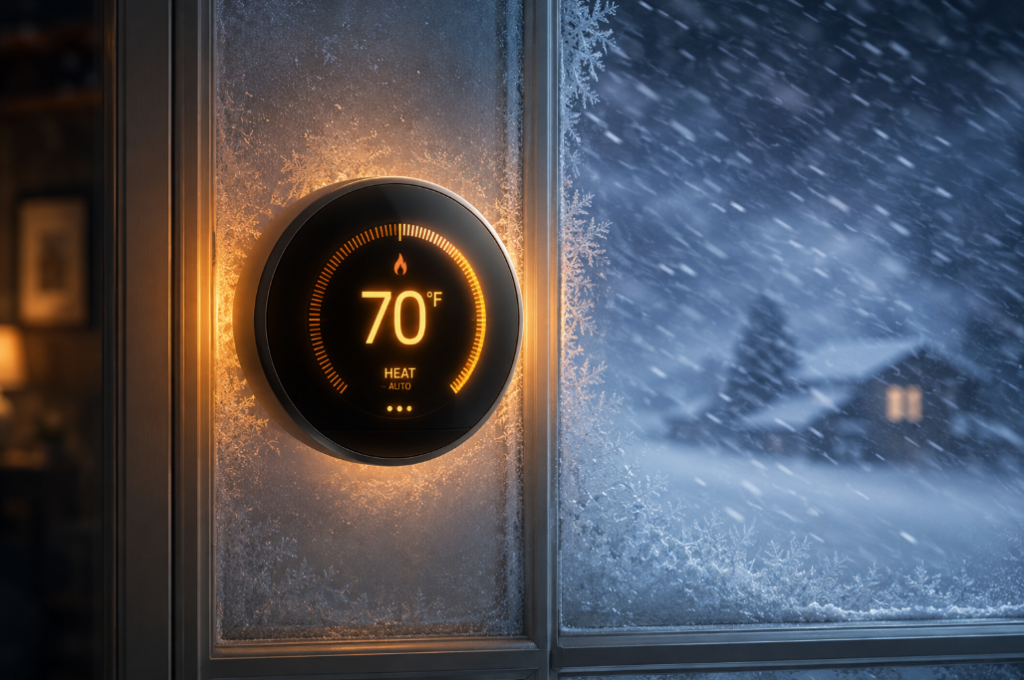
But a thermostat is different. A thermostat is proactive. It doesn’t just record the temperature; it sets it. It has an internal reference point that remains steady regardless of what is happening outside.
The Apostle Paul discovered the secret to becoming a Spiritual Thermostat. He didn’t wait for his circumstances to become “peaceful” before he felt at peace. Instead, he learned the secret of contentment—an internal regulation that allowed him to remain steady whether he was in a prison cell or at a banquet. He realized that peace is not something you find in the room; it is something you bring to the room.
Heart of the Matter
Contentment is the “internal regulator” of the human soul. Most of us spend our lives trying to change the “room” (our jobs, our finances, our relationships) so that we can finally feel comfortable. But biblical peace is about changing the “instrument.”
The Peace of the Perfect Thermostat is found in these truths:
- Independence from the Climate: Contentment is not a natural personality trait; it is a “learned” spiritual skill. It is the ability to say, “My internal setting is locked on the goodness of God.” When your peace is anchored in Christ, you no longer have to mirror the anxiety of the people around you or the volatility of the world.
- The Power of the Set Point: A thermostat works because it has a “set point.” In the Kingdom, our set point is the sovereignty of God. When the “external air” gets cold with lack or hot with stress, the thermostat of the heart kicks in, drawing on the power of the Holy Spirit to bring the internal climate back to peace.
You are not meant to be a reflection of your problems; you are meant to be a regulator of your peace.
Faith in Action
Peace is maintained when we stop asking “How is the weather?” and start asking “What is my setting?”
The Challenge: Identify one “external temperature” that has been making you fluctuate today (e.g., a difficult person’s mood, a mounting deadline, or a financial worry).
- Check the Instrument: Ask yourself: “Am I being a thermometer right now? Am I simply mirroring the stress around me?”
- Reset the Set Point: Physically stop and say out loud: “My setting is Peace. I choose to be content because God is with me. I refuse to let the room dictate my heart.”
- Atmospheric Influence: Instead of absorbing the tension in your next meeting or conversation, intentionally speak words of calm and hope. Watch how “setting your thermostat” can actually begin to change the temperature of the room for others.
Prayer for the Day
Master Regulator, I confess that I have lived like a thermometer. I have allowed the ups and downs of my day to dictate the state of my soul. Forgive me for being a victim of my circumstances. Today, I choose to learn the secret of contentment. Set my heart on the “fixed point” of Your faithfulness. Help me to remain steady and peaceful, regardless of the climate, so that I might bring Your atmosphere wherever I go. Amen.
PEACE Note
“Contentment is not the fulfillment of what you want, but the realization of how much you already have.” — Anonymous