
Love Day #22: The Canceled Ledger

“Bear with each other and forgive one another if any of you has a grievance against someone. Forgive as the Lord forgave you.” — Colossians 3:13 (NIV)
THE JOURNEY
A few years ago, a good friend named Mark came to me in a panic. He had lost his job, his car was impounded, and he was on the verge of eviction. I cared about him, so I transferred two thousand dollars to his account. He wept, promised to pay me back in six months, and called me a lifesaver.
Three months later, he stopped answering my texts. Six months later, I saw photos of him on social media—he was on a ski trip in Colorado with new friends.
The betrayal hit me like a physical punch to the gut. I was furious. I didn’t just want my money back; I wanted justice. I began carrying an invisible ledger in my mind. Every time his name came up, my jaw clenched. I rehearsed the angry speech I would give him if I ever saw him.
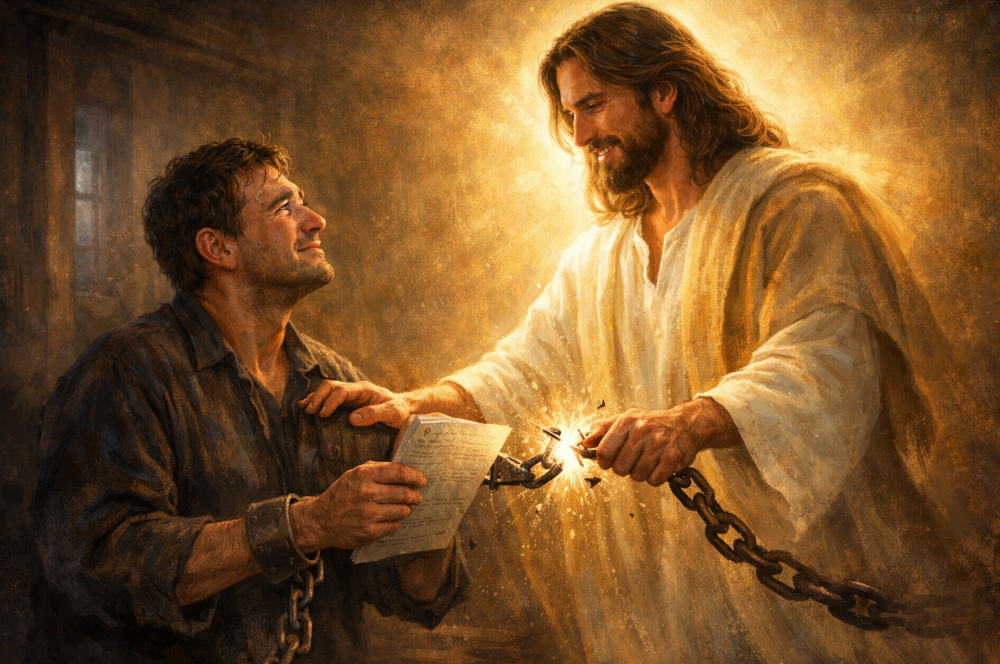
I thought my anger was a shield, protecting me from being taken advantage of again. But in reality, it was a heavy chain. My bitterness started bleeding into my other relationships. I became cynical. I became quick to suspect people’s motives.
One Sunday, my pastor said something that stopped me cold: “Holding onto unforgiveness is like drinking poison and expecting the other person to die.”
I realized Mark wasn’t losing any sleep over my two thousand dollars. He was on a mountain in Colorado. I was the one trapped in a prison of my own making. My refusal to forgive was blocking my ability to experience God’s joy.
I went home, took out a physical piece of paper, and wrote: Mark owes me $2,000 and an apology. I stared at it for a long time. It felt so justified.
Then, I took a red marker and wrote across it in huge letters: CANCELED. I didn’t do it because Mark deserved it. I did it because I loved God more than I loved my anger, and I wanted my heart back. The moment I threw that paper in the trash, an actual, physical weight lifted off my chest. I didn’t get my money back, but I got my peace back.
Heart of the Matter
Forgiveness is often the hardest way we are called to love God. When someone deeply wounds us, our human instinct is to demand payment—either in money, apologies, or their suffering.
But Colossians 3:13 commands us to forgive as the Lord forgave us.
This is the great exchange of grace. You love God by taking your hands off the throat of the person who hurt you. You say, “Lord, because You canceled my unpayable debt, I will cancel this person’s debt to me. I hand them over to Your justice.” He loves you back by opening your prison cell. Bitterness is a toxic acid that destroys its container. When you surrender your grievance to Him, He removes the poison from your spirit. He loves you back by restoring your joy, your lightness, and your capacity to trust again.
Forgiving someone doesn’t mean what they did was okay. It means you trust God to be the Judge, allowing you to go back to being a beloved child.
Faith in Action
Is there an invisible ledger you are carrying today?
The Challenge:
- Take a physical piece of paper and write down the name of the person who hurt you, and exactly what they “owe” you (an apology, a stolen opportunity, a ruined reputation).
- Look at the paper and say out loud: “Lord, I love You more than my right to be angry. I am transferring this debt to You.”
- Tear the paper into tiny pieces or run it through a shredder.
- As it is destroyed, visualize the heavy chain snapping off your own wrists.
Prayer for the Day
Lord of Grace, I confess that I have been keeping score. I have been hoarding my anger because it feels like justice. But it is only making me bitter and tired. Today, I choose to love You by obeying Your hardest command. I choose to forgive [Name]. I release them from my ledger. I surrender my right to get even. Thank You for loving me back by setting me free from this prison. Wash the poison out of my heart and fill it with Your peace. Amen.
LOVE Note
“To forgive is to set a prisoner free and discover that the prisoner was you.” — Lewis B. Smedes